Railway Industry Overview
The Railways in India is among the world’s largest rail network. It is the prime mover of the passengers in the country and is widely looked as the modernization enabler for many industries. The Government has laid a strong emphasis on infrastructure development and come up with a number of initiatives to transform the sector including the planning for the future, i.e PM Gati Shakti Plan10 and National Rail Plan 2030.1 In order to develop the infrastructure for freight and high-speed trains and to fulfill the nation’s expanding needs, the main focus is on investing in Railway infrastructure and encouraging private and foreign engagement in Railways.
Because of the wide range of investment opportunities and supportive government, India is becoming a preferred destination for major global corporations seeking to make strategic investments. Thus the sizable capital expenditure of the Railways is important, both from the opportunities it provides to the manufacturing firms in India as well as the economic multiplier effect it has on the Indian economy.
Features

~8.1 Bn
passengers12
Railways in India operates one of the busiest networks in the world.
~1.1 Bn tonnes
freight carried annually13
Railways also carries many commodities on its network.
~1,19,630 km
track length14
IR network is the world’s third largest network.
A large portion of the heavy engineering and rolling stock used by Railways is manufactured in-house, with the remainder being outsourced to reliable vendors. Planned developments in IR are expected to create immense opportunities for several Indian multinationals and domestic companies operating in this space.
With increasing investments into this sector through government support, multilateral funding, private investments and Foreign Direct Investments, IR seeks to create a holistic environment allowing growth of its network whilst creating significant value for all the stakeholders.
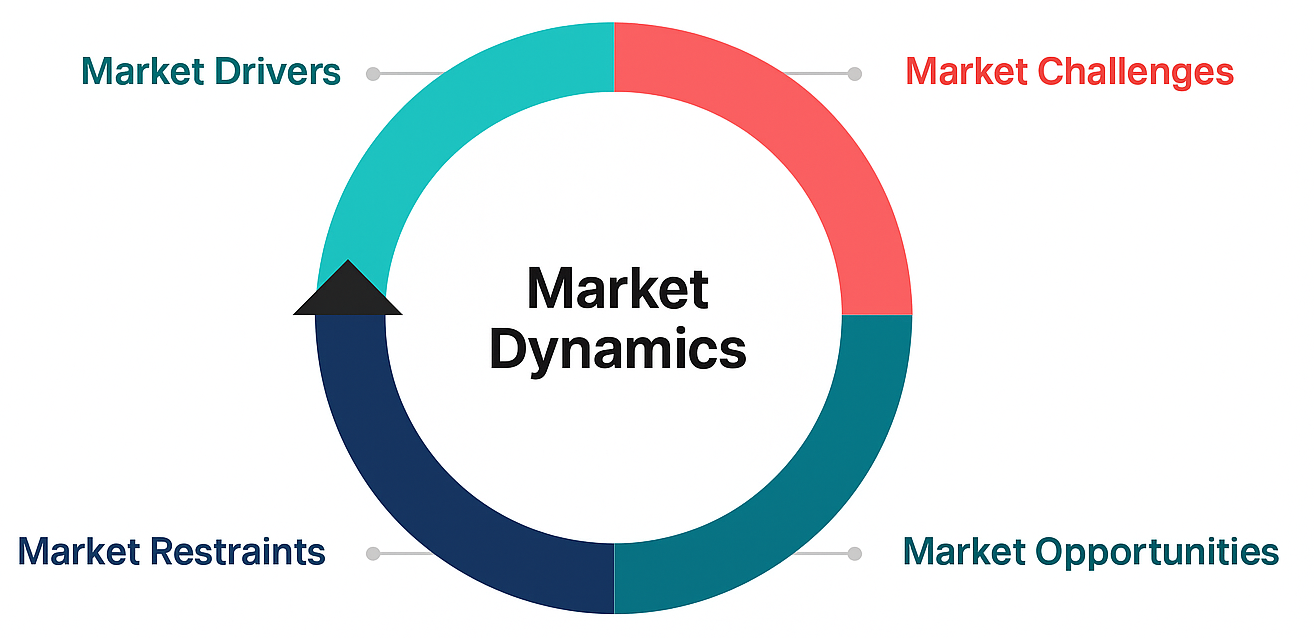
Market Dynamics
Railway industry of India is in focus due to its potential for sustainable growth, long-term stability and being a flagbearer of Indian transportation. a majority of factors drives the market of Railway industry in India such as:
Growing Demand of Freight
The need for freight rail services is increasing in the Indian market, driven by the transportation of various goods for trade and consumption purposes.
Vande Bharat adoption
Vande Bharat trains have been introduced by IR to modernize rail travel. The Government is highly ambitious and announced the conversion of normal 40,000 rail bogies into Vande Bharat standards in the Budget 2024-25.
Rail Centric Policies
Indian Government has announced several rail centric policies such as Viksit Bharat 2047, PM Gati Shakti, Atma Nirbhar Bharat, etc for the development of rolling stock and its components indigenously.
Limited Speed
The railway system encounters challenges with restricted track speeds due to factors such as outdated infrastructure, the design of trains and the excessive congestion of train traffic.
Capital Intensive Project
Rolling stock manufacturers requires large manufacturing units and capital amount for the restraint free production process.
Technological Barrier
Technological upgrades are happening simultaneously due to which, rolling stock suppliers may find integrating technology like IoT, AI, etc challenging.
Regulatory and Compliance Requirements
The rolling stock supplier should comply with the standards set by RDSO or OEM for rolling stock production. These standards are stringent and can require time for approval.
Competition from other modes of transport
Other competing sectors such as road, aviation, inland waterways have also upgraded their networks and have been presenting good opportunities for companies looking to enter the emerging market of India.
Financial challenge
All the railway projects require huge funding for implementation and a longer gestation period for returns. Further, it also requires continuous investment in infrastructure and modernization.
Rising Demand
As the demand of rolling stock gains momentum due to rising demand and urbanization, large number of companies are participating in projects.
Modernise Rolling Stock
Indian Railways plans to upgrade rolling stock of India. Recently, Indian Railways has awarded contract to RITES led JV for rolling stock upgradation.
New Projects
The Union Government has approved many fresh projects of Indian Railways to enhance connectivity between the other zones of railway. These projects are aimed towards increasing the freight share of railways in the GDP.
Key Trends
These are the key trends shaping the industry including the accelerated adoption of digital technologies, a renewed focus on sustainability, and the pursuit of enhanced passenger experiences.

Increased contribution to GDP
India's Railway sector aims to contribute ~1.5% of GDP through infrastructure expansion.21 The goal is to encourage the railways’ 45% modal freight share. Increasing freight loading, electrification and operationalization of dedicated freight corridors are important projects.

Greentech Revolution
The "Hydrogen for heritage" project aims to run 35 hydrogen trains at 90 km distance from Jind - Sonipat soon. This is a step towards decreasing dependency towards fossil fuels, being part of green-tech revolution.22

Technology in Procurement
Operations and efficiency are being optimised by Indian Railways as it has adopted digital technologies for its procurement processes, spanning from tender issuance to goods evaluation. This approach is part of a broader strategy focused on digitalisation23, which supports increased indigenisation and strengthens the supply chain for rolling stock production.
Digital Railway Operations
Railways has adopted automation and Industry 4.0, putting in place the Unreserved Ticketing System (UTS) for automated ticketing and the Real-Time Train Information System (RTIS) for operational efficiency. The railways is dedicated towards its commitment for modernisation through the implementation of AI, IoT, Predictive Maintenance, etc technologies in operations.

KAVACH In Rolling Stock
Indian Railways seeks to implement Kavach 4.0 version in rolling stock as RDSO has approved its specification with more improved functions. As safety is the priority of IR, major improvements includes, location accuracy, improved information of signal aspects in bigger yard and station to station Kavach interface on OFC and Direct Interface to existing Electronic Interlocking System.24

Introduction of Next Generation Trains
Railways is introducing more advanced trains, such as semi high-speed and high-speed trains, with the goal of cutting travel times, improving safety, and providing better passenger comfort.

SMART Coaches
Indian Railways is introducing smart coaches25 with various amenities which will contribute in making passenger travel far way more hassle free than earlier, as facilities included will be Wi-Fi, GPS tracking, Automatic Door System, Surveillance System, etc.

Advancements in real time communication
Railways are using Optical Fibre technology26 and have successfully integrated mobile communication on moving trains. This innovation improves operational efficiency and emergency response by strengthening the interactions between the guard, section control and the locomotive pilot.
Aerodynamic Designs
Railways is adopting aerodynamic designs for various trains such as Vande Bharat, Amrit Bharat, Bullet Train, and locomotives. As these train designs are best to accommodate modernization with speed, stability, acceleration, and safety.

Advanced Eco-Friendly technologies
The latest rolling stock is designed with environmental sustainability as a priority, featuring energy-efficient propulsion and regenerative braking systems, along with optimized lighting and HVAC systems to reduce energy consumption, among other eco-friendly technologies.